
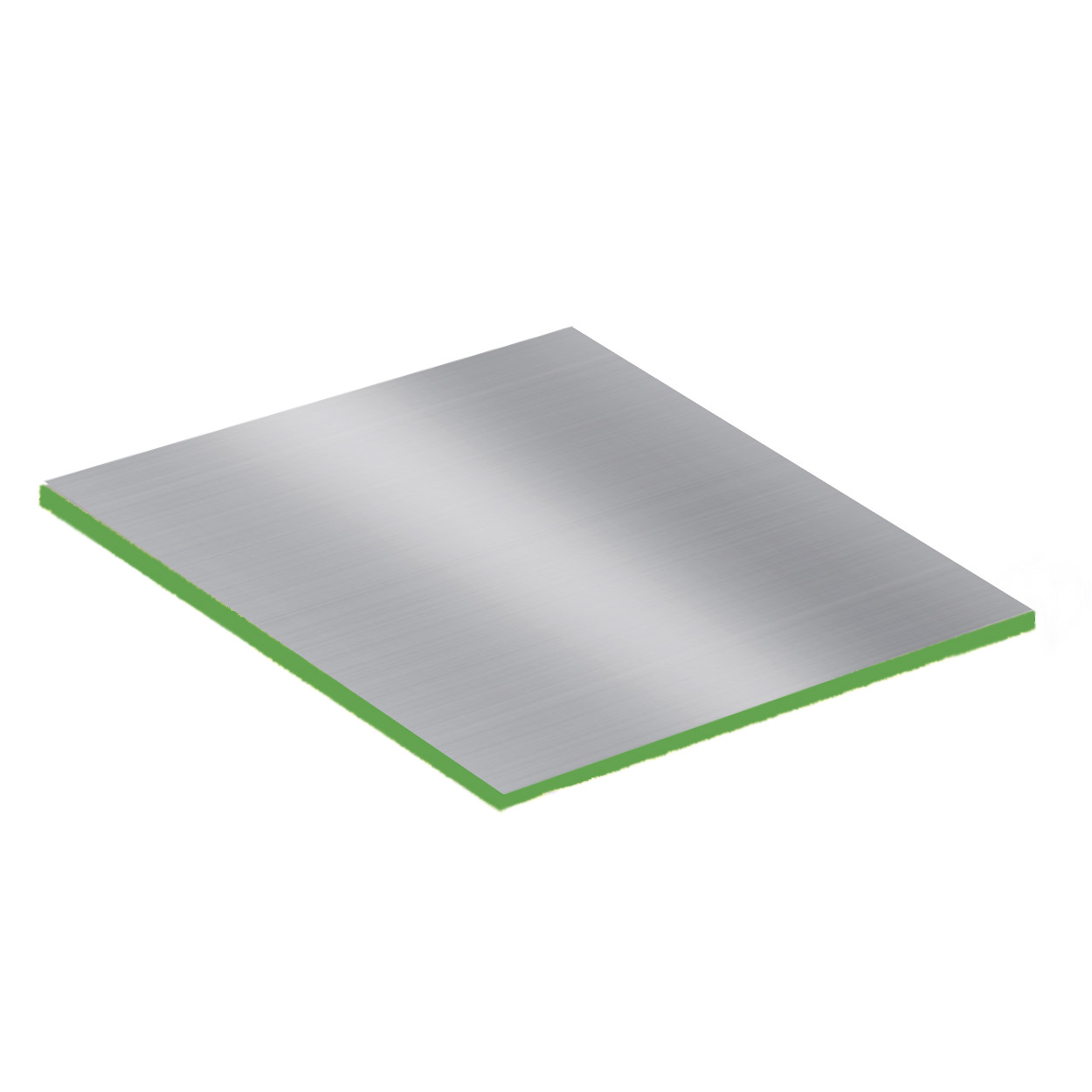
Type 304 Plates
About Type 304 Plates
Type 304 stainless steel plate provides excellent corrosion resistance and formability, with 73,200 PSI tensile strength. Conforms to ASTM A240. Used for food equipment and architectural trim. Los Angeles stock with custom cutting.
Quick Facts
- Material: 304/304L Stainless Steel
- ASTM Standard: A240
- Temper/Condition: Annealed
- Available Sizes: Thicknesses: 3/16", 1/4"
- Location: Los Angeles warehouse
- Services: Custom size, same-day pickup
Overview
Type 304 is the most widely used austenitic chromium-nickel stainless steel, valued for its combination of corrosion resistance, strength, and formability. Its composition provides robust protection against oxidation and corrosion from most oxidizing acids. This versatility makes 304 stainless plate a reliable material for sanitary applications, structural components, and decorative panels. The material's excellent performance and appearance make it a foundational choice in fabrication across numerous industries, from food service to architecture.
Most Type 304 plate is dual-certified as 304L, which contains a lower carbon content to minimize carbide precipitation during welding. This ensures that the corrosion resistance is maintained in the heat-affected zone of a weld, making it ideal for fabricated assemblies that cannot be post-weld annealed. The plate form offers greater rigidity and structural strength than sheet, suitable for heavy-duty countertops, tank fabrication, base plates, and mounting brackets requiring flatness and durability.
Technical Specifications
Mechanical Properties
| Property | Value | Unit |
|---|---|---|
| Tensile Strength | 73,200 | PSI |
| Yield Strength | 31,200 | PSI |
| Elongation | 70 | % |
| Hardness | 123 | HB |
Chemical Composition (Typical)
| Element | Percentage |
|---|---|
| Chromium (Cr) | 18.0 - 20.0% |
| Nickel (Ni) | 8.0 - 10.5% |
| Carbon (C) | ≤ 0.08% |
| Manganese (Mn) | ≤ 2.00% |
| Silicon (Si) | ≤ 0.75% |
| Iron (Fe) | Balance |
Applicable Standards
- ASTM A240: Standard Specification for Chromium and Chromium-Nickel Stainless Steel Plate, Sheet, and Strip for Pressure Vessels and for General Applications.
Common Applications
- Food & Beverage: Commercial kitchen countertops, food processing machinery, brewing tanks, and sinks due to its hygienic, non-reactive surface.
- Architectural: Wall panels, column covers, decorative trim, and handrails for its clean aesthetic and long-term durability.
- Chemical Processing: Storage tanks, process vessels, and housings for equipment handling corrosive solutions.
- Medical & Pharmaceutical: Instrument trays, carts, and cleanroom wall panels requiring frequent sterilization.
- Automotive & Aerospace: Brackets, flanges, and structural components not exposed to extreme temperatures or chlorides.
- Appliance Manufacturing: Panels and structural frames for refrigerators, dishwashers, and washing machines.
- General Fabrication: Base plates, gussets, and mounting pads for machinery and structural supports.
Working with Type 304 Plates
Machining
Type 304 has fair machinability and is prone to work-hardening. Use sharp tooling, slow speeds, and heavy, constant feeds to cut below the work-hardened layer. Chip breakers are recommended to manage the tough, stringy chips produced.
Welding
This material offers excellent weldability by all common fusion methods, including TIG and MIG. To prevent weld decay, use low-carbon 304L filler metals. Post-weld annealing is generally not required for 304L or thin sections of 304.
Finishing
304 plate is typically supplied with a standard No. 1 (HRAP) or 2B mill finish. It responds well to mechanical polishing and brushing to achieve a desired aesthetic for architectural or consumer-facing applications.
Related Products
Frequently Asked Questions
Q: What is the difference between 304 and 304L stainless steel?
A: 304L has a lower maximum carbon content (0.03%) than 304 (0.08%). This reduces the risk of chromium carbide precipitation during welding, preserving corrosion resistance in the heat-affected zone. Most 304 plate is dual-certified to meet both specifications.
Q: Is 304 stainless steel plate magnetic?
A: In its annealed, as-supplied condition, 304 stainless steel is non-magnetic. However, it can become slightly magnetic after it has been cold worked (e.g., bent, formed, or machined). This is a normal characteristic of austenitic stainless steels.
Q: When should I use 316 plate instead of 304 plate?
A: Use 316 stainless steel plate for applications with exposure to saltwater, chlorides, or more aggressive chemical environments. The molybdenum content in 316 provides superior resistance to pitting and crevice corrosion, making it essential for marine and certain chemical processing applications.
Stock & Custom Sizes
Available thicknesses: 3/16", 1/4". Standard plate sizes: 4×10 ft. Custom size available.
Same-day cutting and Los Angeles pickup available.
View Sizes & PricingNeed Type 304 Plates? Contact Bobco Metals for availability and Los Angeles pickup.
Request a Quote Ask an Expert