
Select a Size
0.851
Choose from predefined sizes or select custom size for manual entry
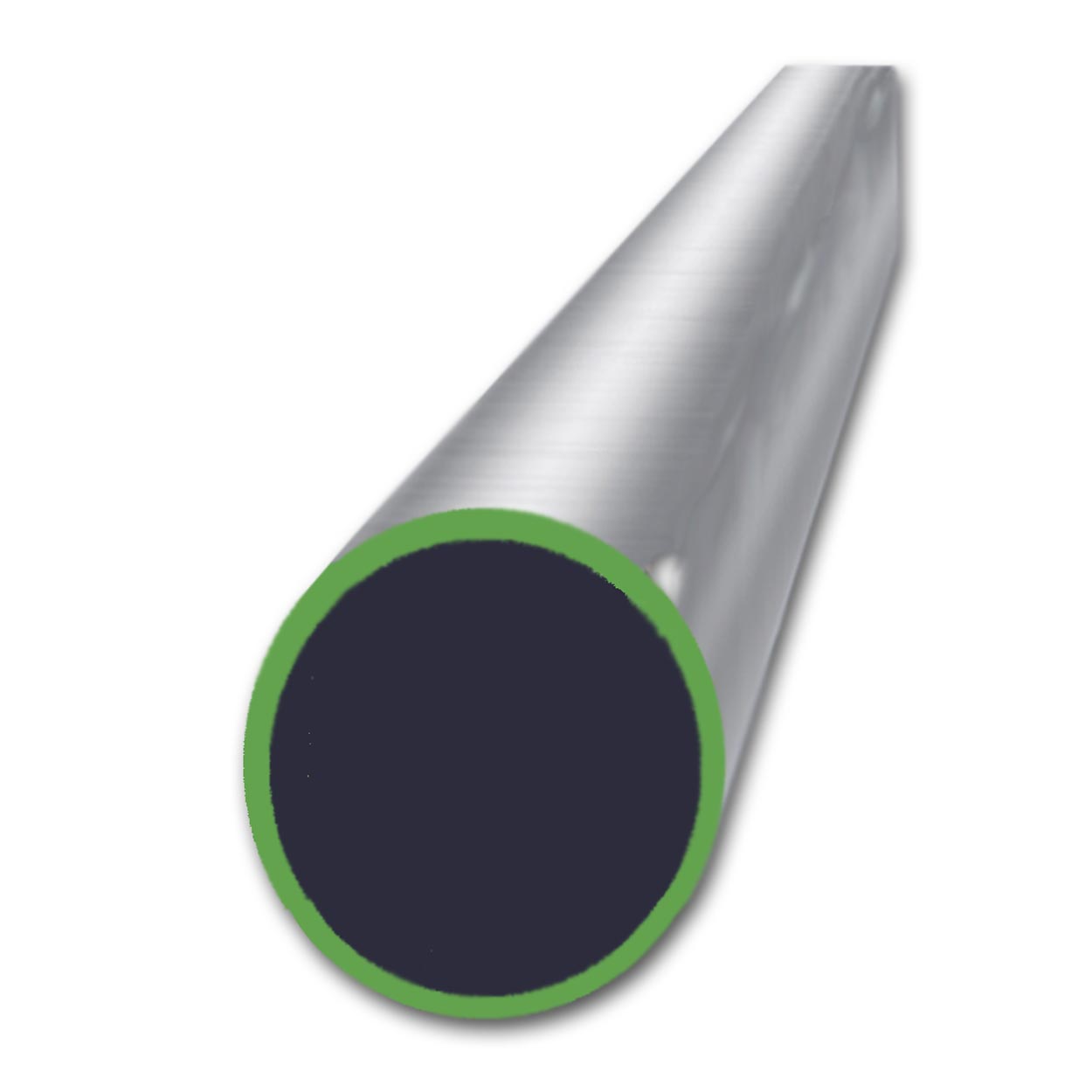
Type 304 stainless steel pipe offers excellent corrosion resistance and weldability. Conforms to ASTM A312. Used for fluid transport in food processing and chemical plants. In stock Los Angeles with custom cutting available.
Type 304 stainless steel pipe is a versatile and widely used material for fluid and gas transport. As an austenitic stainless steel, its primary composition of chromium (18%) and nickel (8%) creates a microstructure that provides exceptional resistance to oxidation and corrosion. This grade is valued for its combination of strength, hygienic properties, and performance across a wide range of temperatures, from cryogenic applications to elevated service conditions.
Its non-magnetic nature and excellent weldability make it suitable for complex piping systems assembled with common fusion techniques. The smooth interior surface of 304 pipe resists product adhesion and is easy to clean, making it a standard choice for sanitary applications. Compared to carbon steel pipe, it offers significantly longer service life in corrosive environments, justifying its use in applications where reliability and low maintenance are critical operational requirements.
| Property | Value | Unit |
|---|---|---|
| Tensile Strength | 73,200 | PSI |
| Yield Strength | 31,200 | PSI |
| Elongation | 70 | % |
| Hardness | 123 | HB |
Type 304 stainless steel is tougher than carbon steel and has a tendency to work-harden. For best results, use sharp tooling, heavy positive feeds, and slow cutting speeds. A continuous cut is recommended to stay below the work-hardened layer. Use of a coolant and lubricant is essential.
This grade has excellent weldability and can be welded using all common fusion methods, including TIG (GTAW) and MIG (GMAW). To prevent weld decay and ensure maximum corrosion resistance at the joint, it is recommended to use 308L filler metal. Post-weld annealing is generally not required.
304 pipe is typically supplied with a standard mill finish. It can be mechanically polished to various finishes, including a brushed, satin, or mirror polish for architectural or sanitary applications. Chemical passivation can be performed to enhance its natural corrosion resistance.
A: 304L has a lower carbon content (0.03% max vs. 0.08% for 304) to minimize carbide precipitation during welding, which improves corrosion resistance at the weld seam. For most pipe applications, the material is dual-certified as 304/304L and is interchangeable.
A: Yes, 304 stainless steel is widely used for potable water systems. It is lead-free, and its excellent corrosion resistance prevents the leaching of harmful materials, ensuring water purity and meeting public health standards.
A: Use 316 pipe for applications with significant exposure to chlorides, such as in marine environments, coastal areas, or for transporting certain industrial chemicals. The added molybdenum in 316 provides superior resistance to pitting and crevice corrosion caused by chlorides.
Available sizes: 1/8" to 3/4" NPS, Schedule 40 and 80. Standard lengths: 21 ft. Custom size available.
Same-day cutting and Los Angeles pickup available.
View Sizes & PricingNeed Type 304 Pipe? Contact Bobco Metals for availability and Los Angeles pickup.
Request a Quote Ask an Expert11 Items
| Item Size & Description | Weight (lbs.)/Ft | Click! Arrow to Select Size | Qty | Price | Actions |
|---|---|---|---|---|---|
SKU
SSPP.500-40
Stainless Steel Pipe 304 - Schedule (40) 1/2 Inch | 0.851 |
Choose from predefined sizes or select custom size for manual entry | Select a Size | ||
SKU
SSPP.750-40
Stainless Steel Pipe 304 - Schedule (40) 3/4 Inch | 1.131 |
Choose from predefined sizes or select custom size for manual entry | Select a Size | ||
SKU
SSPP1.000-40
Stainless Steel Pipe 304 - Schedule (40) 1 Inch | 1.679 |
Choose from predefined sizes or select custom size for manual entry | Select a Size | ||
SKU
SSPP1.250-40
Stainless Steel Pipe 304 - Schedule (40) 1-1/4 Inch | 2.273 |
Choose from predefined sizes or select custom size for manual entry | Select a Size | ||
SKU
SSPP1.500-40
Stainless Steel Pipe 304 - Schedule (40) 1-1/2 Inch | 2.718 |
Choose from predefined sizes or select custom size for manual entry | Select a Size | ||
SKU
SSPP2.000-10
Stainless Steel Pipe 304 - Schedule (10) 2 Inch | 2.638 |
Choose from predefined sizes or select custom size for manual entry | Select a Size | ||
SKU
SSPP2.000-40
Stainless Steel Pipe 304 - Schedule (40) 2 Inch | 3.653 |
Choose from predefined sizes or select custom size for manual entry | Select a Size | ||
SKU
SSPP2.500-40
Stainless Steel Pipe 304 - Schedule (40) 2-1/2 Inch | 5.793 |
Choose from predefined sizes or select custom size for manual entry | Select a Size | ||
SKU
SSPP3.000-40
Stainless Steel Pipe 304 - Schedule (40) 3 Inch | 7.576 |
Choose from predefined sizes or select custom size for manual entry | Select a Size | ||
SKU
SSPP4.000-40
Stainless Steel Pipe 304 - Schedule (40) 4 Inch | 10.790 |
Choose from predefined sizes or select custom size for manual entry | Select a Size | ||
SKU
SSPP5.000-40
Stainless Steel Pipe 304 - Schedule (40) 5 Inch | 14.620 |
Choose from predefined sizes or select custom size for manual entry | Select a Size |