
Select a Size
0.869
Choose from predefined sizes or select custom size for manual entry
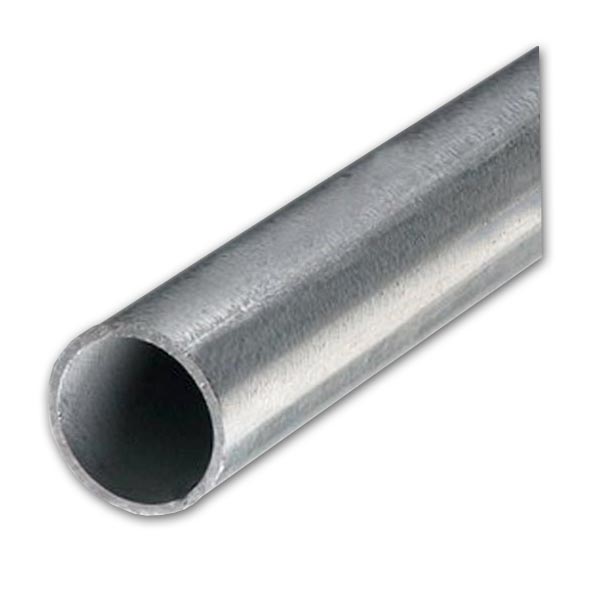
Galvanized steel fence posts provide structural support with excellent corrosion resistance from their zinc coating. Typically conforming to A500 Grade B standards for strength. Ideal for chain-link and security fencing applications.
Galvanized fence posts are steel tubes coated with a protective layer of zinc to prevent rust and corrosion, making them ideal for outdoor use. The galvanization process, typically hot-dip, creates a durable, abrasion-resistant finish that significantly extends the service life of the steel. These posts form the essential framework for various fencing systems, providing the necessary strength to withstand environmental stressors like wind and impact while requiring minimal maintenance over their lifespan.
Manufactured from high-strength steel, these posts are commonly produced as welded round tubing. The combination of steel's inherent durability and the corrosion-proof zinc coating ensures reliability for residential, commercial, and industrial enclosures. They are designed for easy installation, compatible with standard fence fittings, rails, and mesh materials. Bobco Metals stocks multiple diameters and wall thicknesses to meet the specific load requirements for different fence heights and applications.
| Property | Value | Unit |
|---|---|---|
| Tensile Strength | 58,000 | PSI |
| Yield Strength | 46,000 | PSI |
| Elongation | 23 | % |
Machinability is generally fair. The zinc coating can be abrasive to tooling. Use sharp tools and moderate speeds. Avoid inhaling dust or fumes when cutting or grinding galvanized steel.
Welding galvanized steel requires special precautions. The zinc coating must be removed from the weld area to prevent weld porosity and zinc fume inhalation, which is toxic. Proper ventilation and respiratory protection are mandatory. Use welding techniques suitable for thin-walled steel.
The galvanized finish is self-protecting and requires no additional treatment. If painting is desired, the surface must be properly cleaned and primed with a wash primer or a primer specifically designed for galvanized surfaces to ensure adhesion.
For applications requiring different properties, consider Hot Rolled Black Pipe for paintable structural uses, or Schedule 40 Galvanized Pipe for heavy-duty, high-pressure, or plumbing applications where a thicker wall and threaded connections are needed.
A: Galvanized fence posts are typically lighter-gauge (thinner wall) tubes, such as 14-18 gauge, designed specifically for fencing structures. Standard galvanized pipe, like Schedule 40, has a much thicker wall, is rated for pressure, and can be threaded, making it suitable for plumbing and heavy structural uses.
A: The lifespan depends on the thickness of the zinc coating and the environmental conditions. A hot-dip galvanized post can last 20 to 50+ years in most environments before showing significant signs of rust, offering excellent long-term value and low maintenance.
A: Yes, but it requires significant safety precautions. The zinc coating must be ground off the weld zone, and proper ventilation and a respirator are essential to avoid inhaling toxic zinc fumes. It is often easier to use mechanical fittings designed for fence construction.
Available ODs: 1-3/8", 1-5/8", 1-7/8". Wall thicknesses: 18 gauge (0.048"), 16 gauge (0.060"), and 14 gauge (0.075"). Standard lengths: 24 ft. Custom size available.
Same-day cutting and pickup available.
View Sizes & PricingNeed Galvanized Fence Posts? Contact Bobco Metals for availability and Los Angeles pickup.
Request a Quote Ask an Expert8 Items
| Item Size & Description | Weight (lbs.)/Ft | Click! Arrow to Select Size | Qty | Price | Actions |
|---|---|---|---|---|---|
SKU
GLFP1.315X15X24
Galvanized Fence Post - 16 Gauge X 1-3/8 Inch | 0.869 |
Choose from predefined sizes or select custom size for manual entry | Select a Size | ||
SKU
GLFP1.66X14GAX24'
Galvanized Fence Post - 14 Gauge X 1-5/8 Inch | 1.375 |
Choose from predefined sizes or select custom size for manual entry | Select a Size | ||
SKU
GLFP1.66X15X24
Galvanized Fence Post - 16 Gauge X 1-5/8 Inch | 1.125 |
Choose from predefined sizes or select custom size for manual entry | Select a Size | ||
SKU
GLFP1.66X18GA24'
Galvanized Fence Post - 18 Gauge X 1-5/8 Inch | 0.900 |
Choose from predefined sizes or select custom size for manual entry | Select a Size | ||
SKU
GLFP1.875X14GAX24
Galvanized Fence Post - 14 Gauge X 1-7/8 Inch | 1.667 |
Choose from predefined sizes or select custom size for manual entry | Select a Size | ||
SKU
GLFP1.90X15X24
Galvanized Fence Post - 16 Gauge X 1-7/8 Inch | 1.269 |
Choose from predefined sizes or select custom size for manual entry | Select a Size | ||
SKU
GLFP2-3--8X14GAX24
Galvanized Fence Post - 14 Gauge X 2-3/8 Inch | 1.833 |
Choose from predefined sizes or select custom size for manual entry | Select a Size | ||
SKU
GLFP2.375X15X24
Galvanized Fence Post - 16 Gauge X 2-3/8 Inch | 1.599 |
Choose from predefined sizes or select custom size for manual entry | Select a Size |