
2.250
Choose from predefined sizes or select custom size for manual entry
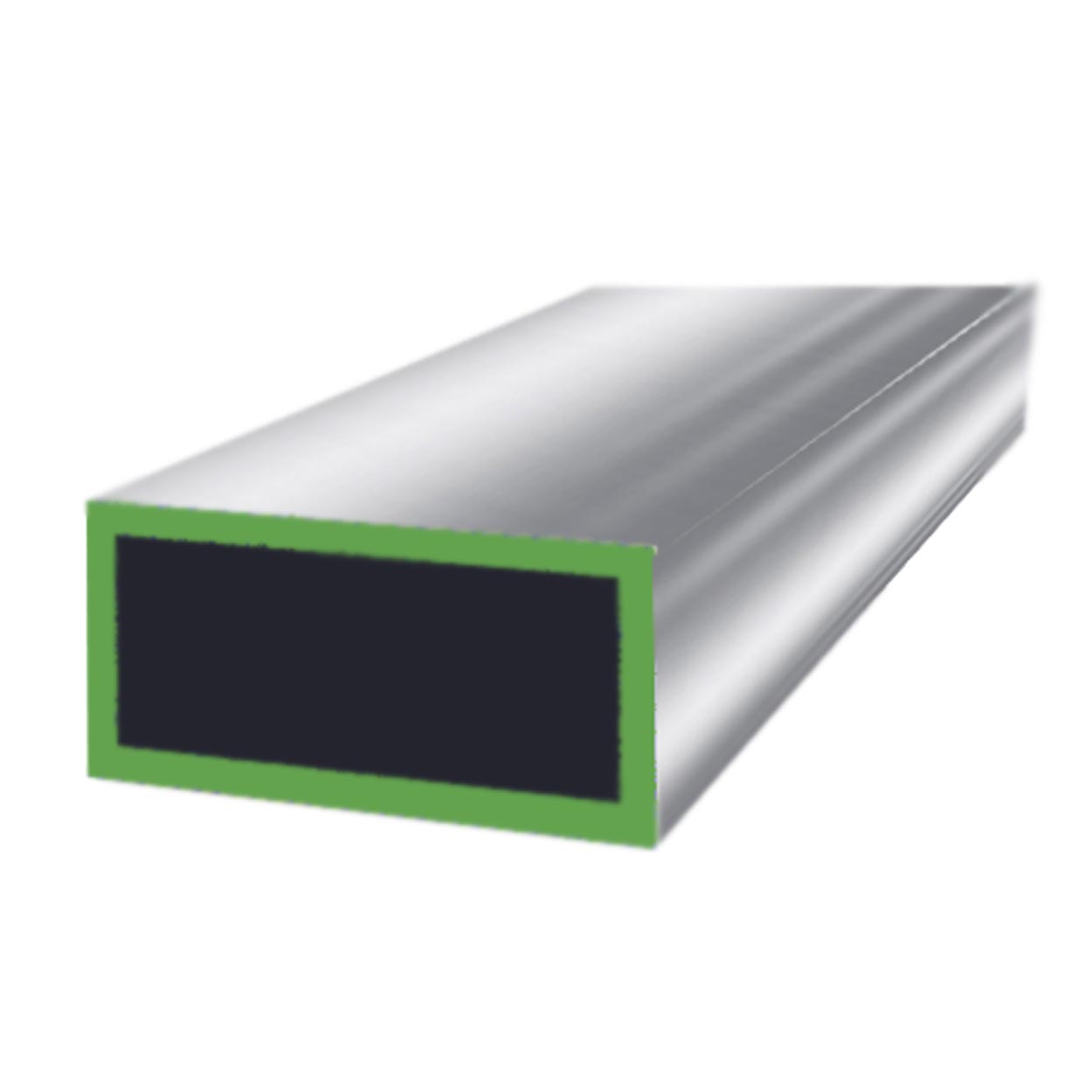
Type 304 stainless steel rectangular tube provides excellent corrosion resistance, weldability, and a 73,200 PSI tensile strength. Meets ASTM A269 standards. Ideal for structural and architectural applications. Custom cutting available.
Type 304 is the most widely used austenitic stainless steel, known for its balanced properties. Its composition, primarily 18% chromium and 8% nickel, creates a passive layer that provides exceptional resistance to corrosion from atmospheric conditions, chemicals, and food products. This non-magnetic alloy maintains its strength and toughness at both elevated and cryogenic temperatures, making it a versatile choice for a wide range of environments.
As rectangular tubing, the 304 grade offers high strength-to-weight ratios and superior torsional resistance, ideal for building durable frames, supports, and railings. Its clean, smooth surface finish makes it suitable for architectural and decorative applications where aesthetics are important. The material's excellent formability allows for bending and shaping without compromising its structural integrity, providing flexibility for complex fabrication projects.
| Property | Value | Unit |
|---|---|---|
| Tensile Strength | 73,200 | PSI |
| Yield Strength | 31,200 | PSI |
| Elongation | 70 | % |
| Hardness | 123 | HB |
Type 304 has fair machinability but is prone to work hardening. Use sharp tools, slow speeds, and heavy, constant feeds to prevent glazing. The use of a chip breaker is recommended to manage the tough, stringy chips produced.
Exhibits excellent weldability by all standard fusion methods, both with and without filler metals. Post-weld annealing is not required to restore corrosion resistance for most applications, though it can relieve stresses from heavy weld sections.
Can be supplied with a standard mill finish or polished to various grits for aesthetic applications. The surface is non-porous and easily cleaned or sterilized, making it suitable for sanitary applications.
A: Both offer excellent corrosion resistance, but 316 contains molybdenum, which significantly enhances its resistance to chlorides and pitting, making it superior for marine or chemical processing environments. 304 is more cost-effective for general-purpose applications.
A: Yes, Type 304 is an excellent choice for outdoor railings due to its high resistance to atmospheric corrosion. It maintains its appearance and structural integrity for years with minimal maintenance. For coastal or high-salt environments, Type 316 is recommended.
A: Most 304 rectangular tubing is produced by welding from flat-rolled stainless steel. This process provides tight dimensional tolerances and a high-quality surface finish suitable for structural and architectural use. For specific seamless requirements, please contact us.
Available size: 2" x 1". Wall thickness: 0.120". Standard lengths: 20 ft. Custom size available.
Same-day cutting and Los Angeles pickup available.
View Sizes & PricingNeed Type 304 Rectangular Tubes? Contact Bobco Metals for availability and Los Angeles pickup.
Request a Quote Ask an Expert1 Item
| Item Size & Description | Weight (lbs.)/Ft | Click! Arrow to Select Size | Qty | Price | Actions |
|---|---|---|---|---|---|
SKU
SSTR2X1X.120
Stainless Steel Rectangular Tube 304 - 2 Inch X 1 Inch X 0.120 | 2.250 |
Choose from predefined sizes or select custom size for manual entry | Select a Size |