
Select a Size
6.375
Choose from predefined sizes or select custom size for manual entry
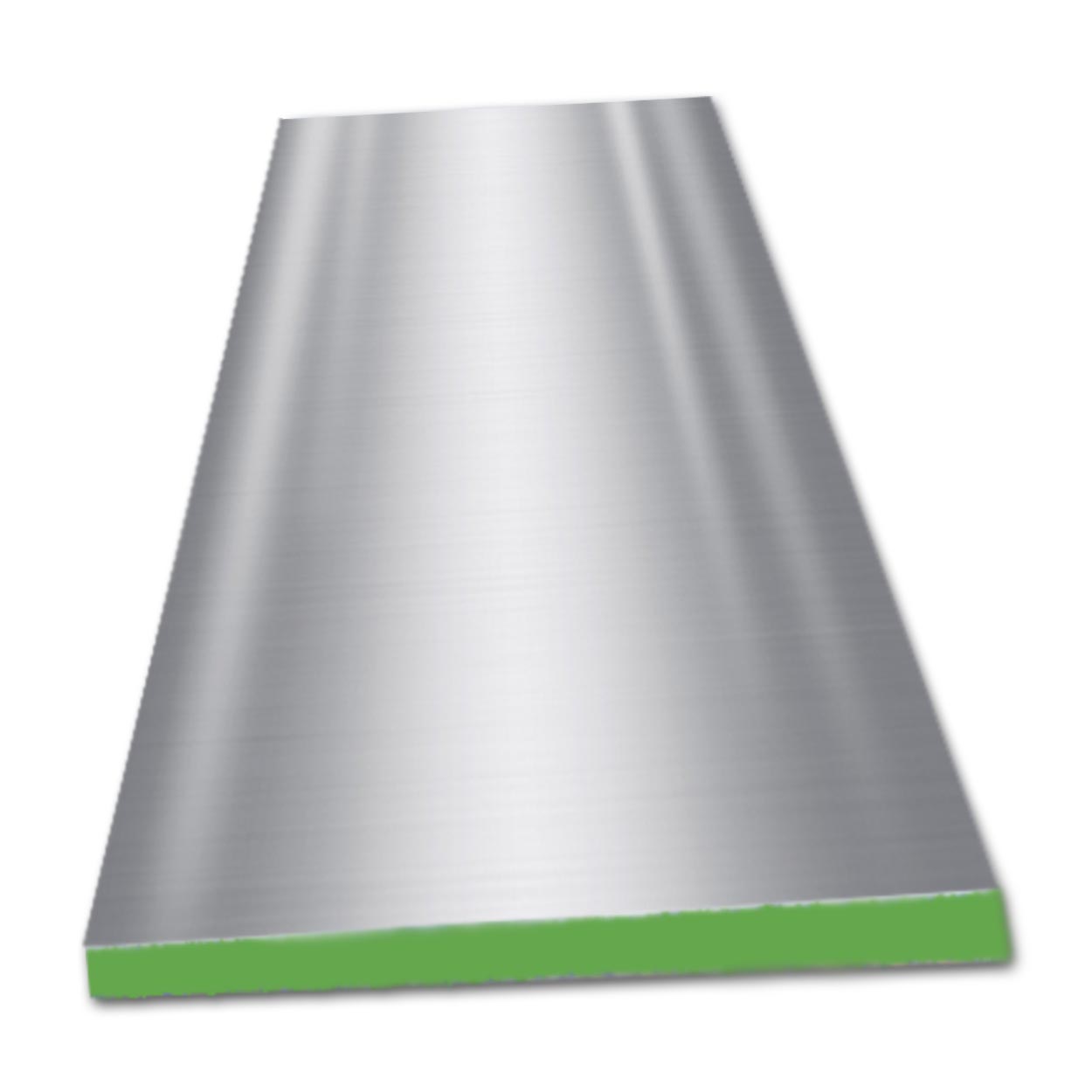
Type 304 stainless steel flat bar offers excellent corrosion resistance, high ductility, and superior weldability. Conforms to ASTM A276. Ideal for structural supports and food processing equipment. Los Angeles stock with custom cutting.
Type 304 stainless steel is the most widely used austenitic chromium-nickel alloy, often referred to as "18-8" for its composition of 18% chromium and 8% nickel. This makeup provides excellent resistance to a wide range of atmospheric, chemical, and food industry corrosives. In its annealed condition, Type 304 is non-magnetic and possesses exceptional ductility and formability, making it suitable for complex shapes. It maintains its properties even at cryogenic temperatures.
As a flat bar, Type 304 provides a versatile, rectangular profile with sharp corners and precise dimensions, ideal for structural and fabrication projects. The material’s inherent strength and corrosion resistance make it a durable choice for braces, supports, and framework. Its clean, mill finish also allows it to be used in architectural and decorative applications where both aesthetics and longevity are important. Most stock is dual-certified as 304/304L, ensuring good weldability.
| Property | Value | Unit |
|---|---|---|
| Tensile Strength | 73,200 | PSI |
| Yield Strength | 31,200 | PSI |
| Elongation | 70 | % |
| Hardness | 123 | HB |
Type 304 stainless steel has fair machinability but is prone to work-hardening. For best results, use slow speeds, heavy and constant feeds, sharp tooling, and a proper lubricant. Chip breakers are recommended as the chips can be stringy and tough.
This grade exhibits excellent weldability by all standard fusion methods, both with and without filler metals. For maximum corrosion resistance, use AWS E/ER 308L filler rods. Post-weld annealing is generally not required for thin sections, especially when using the low-carbon 304L variant.
304 stainless steel can be mechanically polished to a variety of finishes, including brushed (#4) or mirror (#8). After fabrication or welding, the surface should be cleaned and passivated to remove free iron and restore the protective chromium-oxide layer for maximum corrosion resistance.
A: 304L has a lower carbon content (0.03% max) than standard 304 (0.08% max). This reduction minimizes carbide precipitation during welding, which can reduce corrosion resistance. For this reason, 304L is preferred for welded components, especially thicker sections. Most of our stock is dual-certified 304/304L.
A: In its fully annealed state, Type 304 is non-magnetic (a key characteristic of austenitic stainless steels). However, it can become slightly magnetic after cold working (e.g., bending, forming, machining), as the process can transform some of the austenite into martensite.
A: You should choose Type 316 when your application involves exposure to salt water, de-icing salts, or other chloride solutions. The addition of molybdenum in 316 provides significantly greater resistance to pitting and crevice corrosion compared to 304, making it the standard for marine environments.
Available widths: 1/2" to 3-1/2". Thicknesses: 1/16" to 1/8". Standard lengths: 12 ft. Custom size available.
Same-day cutting and Los Angeles pickup available.
View Sizes & PricingNeed Type 304 Flats? Contact Bobco Metals for availability and Los Angeles pickup.
Request a Quote Ask an Expert1 Item
| Item Size & Description | Weight (lbs.)/Ft | Click! Arrow to Select Size | Qty | Price | Actions |
|---|---|---|---|---|---|
SKU
SS04FB.75X2.50
Stainless Steel Flat Bar 304 - 3/4 Inch X 2-1/2 Inch | 6.375 |
Choose from predefined sizes or select custom size for manual entry | Select a Size |